
How to Apply Ear Medication to Your Dog
A step-by-step guide from the team at East End Veterinary Hospital
If your dog has been prescribed ear medication, you might be wondering how to make the process go smoothly at home. The good news is that with a little patience and the right technique, most dogs can learn to tolerate — and even accept — ear treatment without too much fuss.
Here’s everything you need to know before you get started.
A Few Things to Keep in Mind
Ear infections and other ear conditions can be surprisingly painful. Even the gentlest, most easy-going dog may react by struggling, growling, or trying to bite or scratch when their ears are touched. This isn’t bad behaviour — it’s a pain response, and it’s completely understandable.
Be patient, go slowly, and if your dog is clearly distressed, don’t hesitate to use a muzzle until the medication starts to bring some relief. Always read the drug label carefully and make sure you understand the dosing instructions before you begin. If anything is unclear, give us a call.
Tips for Making It Easier
A little preparation goes a long way:
- Warm the medication first. If it’s been stored in the fridge, roll the bottle between your palms for a minute before applying. Cold drops in a sore ear are never fun.
- Build positive associations. Show your dog the ear medication bottle several times a day and follow it with a treat or some affection — before you even need to use it. You’re teaching them that the bottle means good things.
- Practise gentle ear handling daily. Regularly massage your dog around the neck and ears, occasionally lifting the ear flap. This helps them learn that ear touching is normal and safe.
- Ask about pain relief. If your dog is really struggling, let us know. Additional pain medication can make the whole process much easier for everyone.
- Understand the anatomy. A dog’s ear canal is L-shaped. Pulling the ear flap gently upward straightens the canal and helps medication flow where it needs to go.
Step-by-Step: How to Apply the Medication
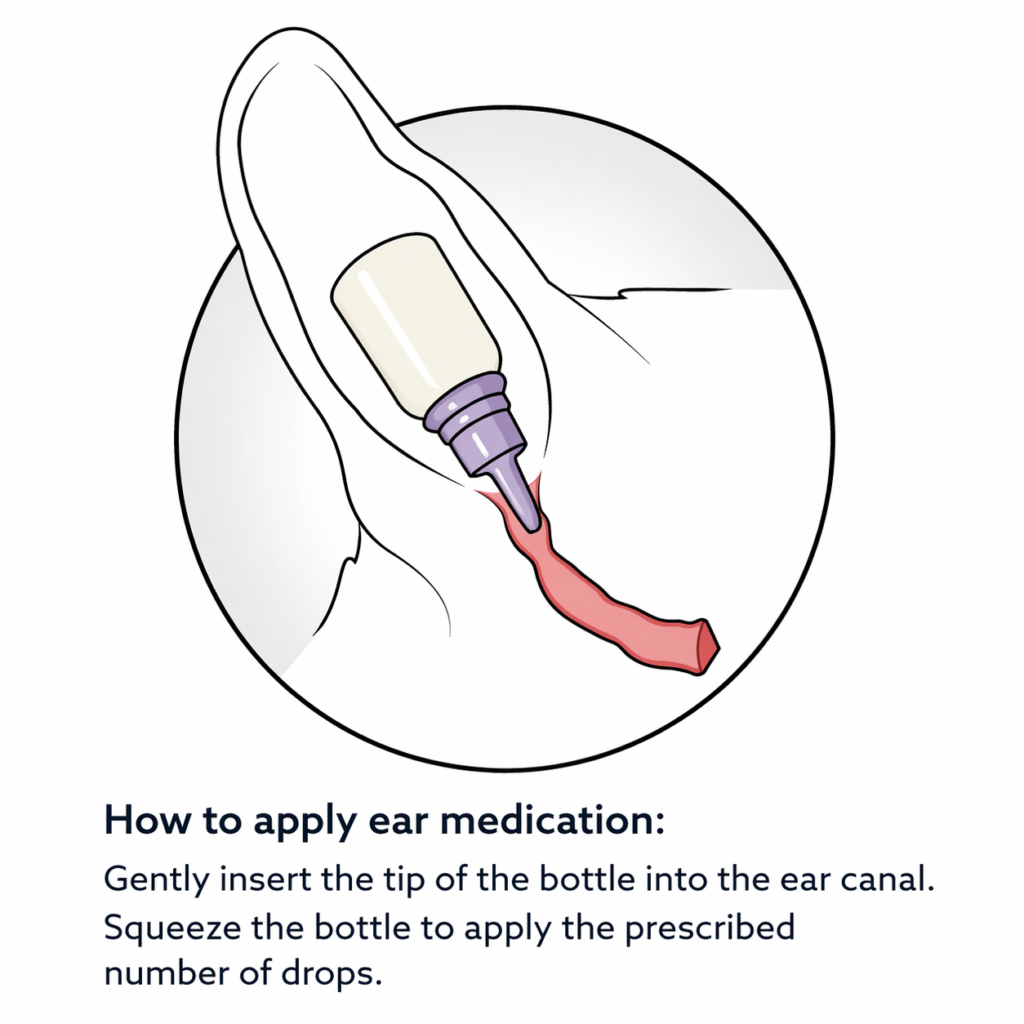
Before you begin, confirm with your veterinarian whether the bottle or syringe tip can be placed directly into the ear canal, or whether it should be held above and dripped in. This matters for how you apply it.
1. Prepare the medication. Shake the bottle well, then draw up the prescribed amount into a syringe or dropper if needed.
2. Get into position. Find a quiet spot away from other pets and household distractions. How you position your dog depends on their size:
- Large dog: Have them sit with their rear end in the corner of the room, one side against the wall. Stand on the open side.
- Medium dog: Sit on the floor with your dog sitting in front of you, rear end tucked between your legs.
- Small dog: Sit them comfortably in your lap.
3. Start with some ear love. Spend a moment rubbing around your dog’s head and ears. Most dogs genuinely enjoy this, and it helps them relax before you get to the treatment part.
4. Hold the ear flap. With your non-dominant hand, gently but firmly grasp the tip of the ear and pull the flap straight up. This exposes the ear opening and straightens the L-shaped canal.
5. Apply the medication.
- If the bottle is designed to go into the ear: Gently insert the tip straight down into the canal and dispense the prescribed amount.
- If the bottle should not touch the ear: Hold the ear up as described, then squeeze the dropper so the medication falls into the canal opening.
6. Massage the base of the ear. Once the medication is in, gently massage the base of the ear — just below the ear opening — for about 30 seconds. You should hear a soft squishing sound as the medication works its way through the horizontal part of the canal. That means it’s getting where it needs to go.
7. Treat the ear flap if needed. If the infection involves the inner surface of the ear flap itself, apply the prescribed amount of medication to that area and spread it gently with a gloved finger.
8. Clean the tip. Wipe the tip of the bottle or syringe with a clean cotton ball moistened with rubbing alcohol. This helps prevent the spread of bacteria or yeast between treatments.
9. Wipe away any excess. If medication or debris accumulates on the flap, wipe it away with a cotton ball dampened with ear cleaning solution. Your dog will probably shake their head at this point — that’s completely normal.
Don’t Forget the Reward
Give your dog plenty of praise throughout the whole process, and offer a treat during and after. The more consistently you pair ear treatment with something enjoyable, the easier it will get over time.
When to Call Us
If your dog is resistant to ear treatment despite your best efforts, please reach out to our team. There may be alternatives worth exploring, or your dog may benefit from additional pain management to make the process more comfortable.

0 Comments